01
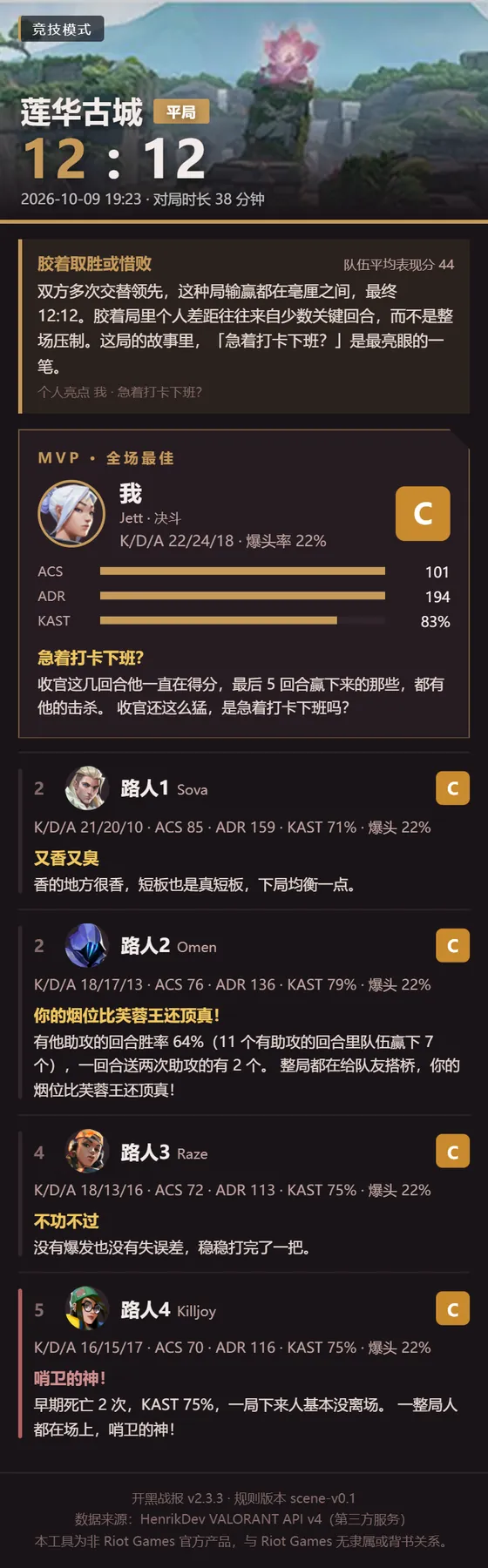
Round story
A short, evidence-based narrative of how the match turned: opening contact, mid-round swings, closing rounds.
VBR turns a VALORANT match into a clear report: what actually happened, who carried the rounds, and what the numbers can — and cannot — tell you. Built for groups that review together.
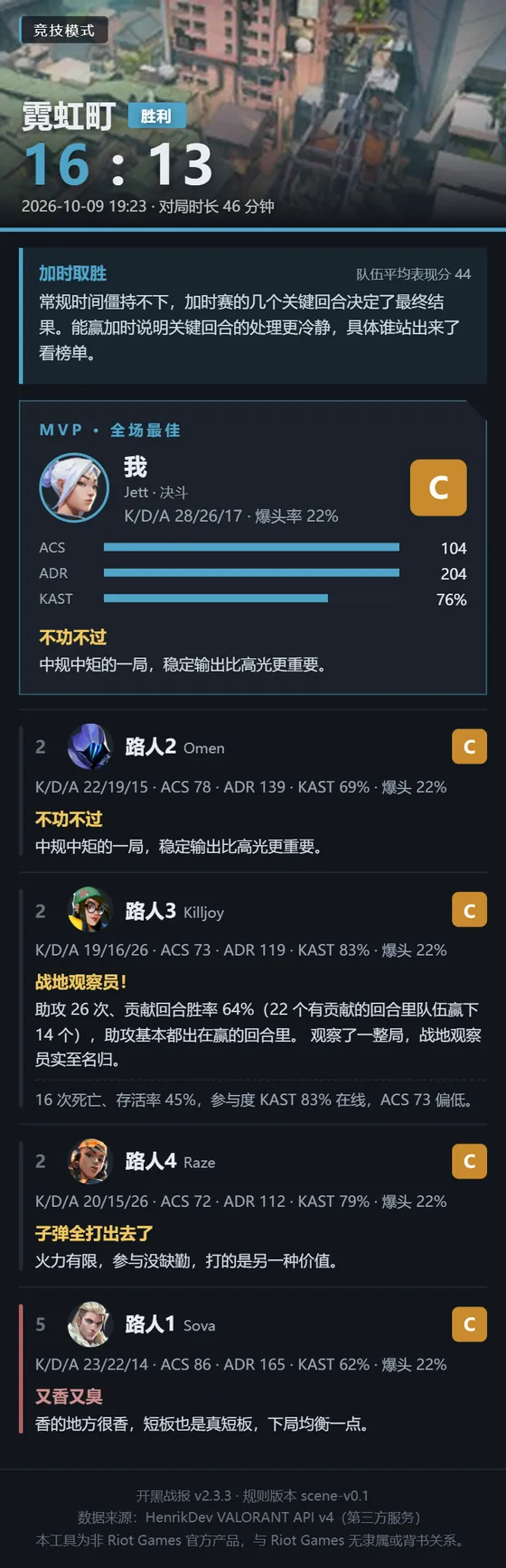
Every number is paired with a plain-language reading, so the report is useful to the whole squad — not just the person who reads ADR for fun.
A short, evidence-based narrative of how the match turned: opening contact, mid-round swings, closing rounds.
All five players in one consistent order, with role context and a low-impact marker that does not rely on nicknames.
Export a 750px long image for Discord or your group chat. The layout is stable, readable and does not expose raw identities.
We separate “what the data says” from “why it happened”. No invented causes, no fake trends, no toxicity.
Server-side processing keeps API keys and raw provider payloads away from the browser.
We resolve the account and load recent Competitive / Unrated matches. No password, no client injection.
Normalization, metrics and the round story are produced by our Python pipeline — the same code that powers the desktop app.
Read the report in the browser, export the long image, or create a revocable share link with an opaque token.
Samples use synthetic match data and are clearly labelled. Real match processing arrives with the W3 demo.